
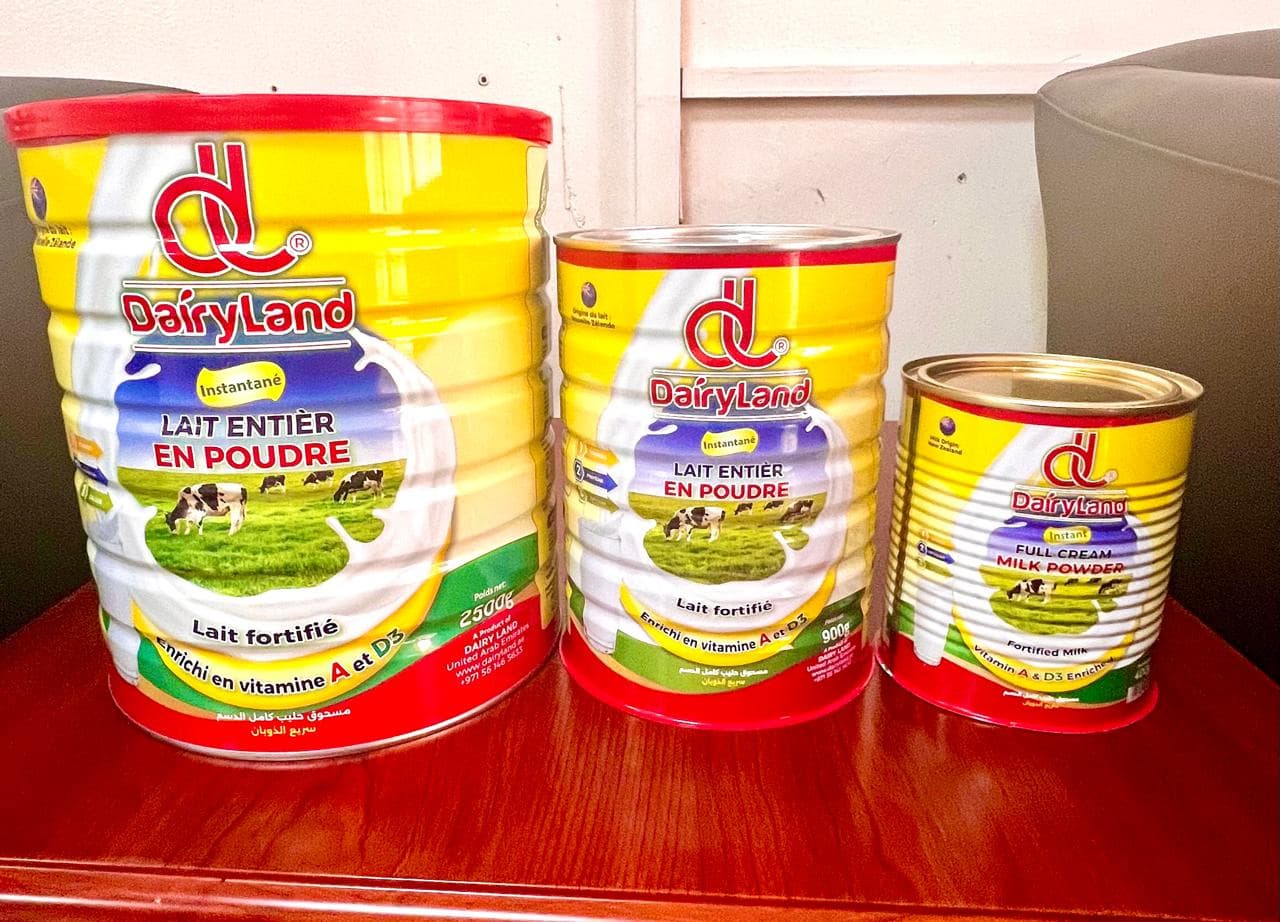
Global dairy markets are navigating a rare moment of simultaneous output growth across nearly every major producing region. For importers, distributors, and food manufacturers in the UAE and West Africa, understanding where that supply is coming from — and where it may tighten — is essential for sound procurement planning.
A World Producing More Milk, But Not Always More Powder
The October 2026 Daily Dairy Report confirms that world milk production is growing at its fastest rate in over a decade, led by robust expansion in the United States and Europe. USDA projects US full-year 2026 output at 236.9 billion pounds, though that estimate was trimmed by 300 million pounds in the October WASDE revision. The EU's total milk collection is also rising modestly, while Argentina is forecast to expand production by approximately 4% to 12.0 million metric tons in 2026, backed by favourable weather, strong feed reserves, and a stable exchange rate.
The critical nuance for powder buyers is the product mix shift. The EU is producing more butter and skim milk powder (SMP) rather than whole milk powder (WMP), while New Zealand — historically the world's dominant WMP exporter, with 2026 forecasts around 1.395 million MT — is actively redirecting milk into higher-value cheese, butter, and anhydrous milk fat. Australia, meanwhile, continues to contract due to drought-related feed shortages and a smaller herd.
The net result: global WMP availability is not growing as fast as overall milk output might imply, and that distinction matters enormously for West African buyers whose product needs skew heavily toward WMP and fat-filled milk powder (FFMP).
Price Signals: SMP Firms, WMP Holds Steady
Price benchmarks as of August–September 2026 reflect these supply dynamics. EU SMP was priced at approximately USD 3,323/MT (EXW), with comparable CIF values into India, China, and Australia clustered around USD 3,223–3,250/MT. WMP on the EU's FAS average ranged between USD 3,585 and 3,695/MT over the same period.
At the 1 September 2026 Global Dairy Trade (GDT) auction, the overall index rose 0.9%, with SMP surging 5.3% to €3,187/t — marking a fourth consecutive auction of overall gains. WMP edged down just 0.1% to €3,092/t, suggesting relative stability rather than any sharp correction.
One notable development is the sharp drop in US export volumes. US SMP/nonfat dry milk exports hit only 101 million pounds in August 2026 — the smallest monthly volume in over seven years, down 19.2% year-on-year — widening the gap between US domestic powder values and international benchmarks. This is partly a function of strong internal US demand absorbing domestically produced supply, and partly a reflection of elevated international prices making US product less competitive at the margin.
Argentina is stepping into the gap. WMP exports from Argentina are up approximately 15% in 2026, with SMP, butter, and AMF exports rising around 9%. For West African markets that Dairy Land and its peers serve, Argentina's growing export footprint represents a material new source of competition on price and availability.
West Africa: Structural Import Dependence Meets Margin Pressure
West Africa remains one of the most import-dependent dairy regions in the world, and the fundamentals driving demand are durable: urbanisation, a growing middle class, and expanding food-processing sectors that rely on reconstituted milk, bakery inputs, and dairy-based beverages.
The African WMP market is estimated at 450,000–550,000 metric tons in 2026. Nigeria, Ghana, and Côte d'Ivoire together account for an estimated 35–40% of African WMP imports. Nigeria alone consumes an estimated 100,000–130,000 MT of WMP annually, almost entirely sourced from imports. Ghana's annual WMP imports run at 30,000–45,000 MT, with total milk powder import values reaching USD 112 million in the twelve months to May 2026 across nearly 1,900 shipments.
Yet the operating environment for regional importers and distributors is tightening. Nigeria's formal milk powder import values are projected to decline from USD 37.6 million in 2024 to approximately USD 31.2 million in 2026, reflecting the combined weight of naira weakness, elevated import tariffs, and government policy encouraging domestic processing. The FFMP segment — a critical affordable category estimated at 450,000–520,000 MT across Africa in 2026 — carries import duties of 20–35% in Nigeria, with 90–95% of Nigerian supply sourced externally, primarily from Malaysia and Indonesia. Lagos/Apapa and Ghana's Tema port together handle a large share of regional import volumes.
Takeaway for Buyers and Distributors
The broad supply expansion underway in 2026 provides some buffer against sudden price spikes, but it does not translate uniformly into lower WMP costs for West African importers. The EU's product mix shift and New Zealand's strategic pivot away from WMP are quietly tightening the specific product streams most relevant to this region. Argentina's export surge offers an alternative origin worth monitoring for price competitiveness. Meanwhile, buyers operating in Nigeria and Ghana face persistent structural headwinds — currency pressure, tariffs, and policy uncertainty — that make forward planning and reliable supplier relationships more valuable than ever. Tracking GDT auction results and USDA WASDE revisions on a monthly basis remains a sound discipline for any importer with significant powder exposure.
Sources
- The Global Milk Market
- Milk Powder Market Size, Share & Industry Report 2034
- How dairy’s Big 7 will shape exports amid global milk oversupply
- Gap between US and international milk powder values has widened to a chasm
- Milk Powder Market - Global Forecast 2026-2032 - Research and Markets
- Milk Powder Suppliers, Export Data & Price Trends
- Whole Milk Powder Market: Global Industry Trend Analysis ...
- Milk Powder Market Size, Share, Trends 2036
This article is market commentary prepared by the Dairy Land Research Team for general information only and does not constitute commercial, financial or trading advice.